|
|
 |
|
|
|
|
|
Ultrasonic Thickness Gauges - Basic
|
Back
|
| |
|
The Current State-of-the-Art
|
Ultrasonic thickness gauging has changed
significantly over the past few years. There are new requirements for
repeatability, data recording and through coating measurements that we did not
even think about when we first started selling these instruments, nearly thirty
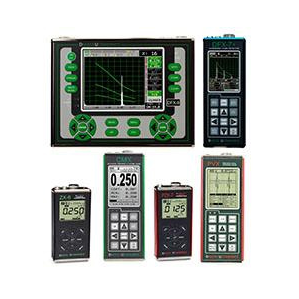
years ago. The ultrasonic thickness gauges we offer today are well
constructed, reliable instruments. They are available from the barest of basic
gauges to fully loaded, feature packed, computer interfaceable instruments.
Even the most basic gauges now have many new and useful features. The typical
U.S. made instrument is superior in both features and reliability, to any of the
imports we have seen. We advise you to be cautious in buying, as there
are many cheap instruments from third world countries being advertised in
catalogs, post card packs, and trade magazines. They are rarely identified as
to where they came from or who actually made them. Buyer
beware!! We do not object to imports in general, but we have little
tolerance for poorly made or unreliable instruments being sold for applications
involving safety and quality. There may be places to cut corners - this is not
one of them! Today's prices are lower, the quality higher, and you have
more models and features to choose from than at any time in the
past.
|
|
How Ultrasonic Thickness Gauges Work
|
Corrosion & General Purpose Gauges (D-Meters & T-Mikes)
Corrosion and general purpose ultrasonic thickness
gauges measure the elapsed time from the instant the sound beam leaves the probe
until it is returned as a result of reflection from the opposite
surface. Thickness is equal to this time value divided by two and then
multiplied by the material's sound velocity. Corrosion and General
Purpose Gauges use "dual" probes that are capable of getting a useable echo on
materials with corroded and pitted back walls. This class of thickness
gauge can also be used on attenuative, large grained materials such as casting
and plastics.
Precision and Through Coating
Thickness Gauges
Precision and "through coating" thickness gauges use a
"multiple echo" technique. These instruments measure the time between the first
and second or subsequent reflections. Some require three "multiple
echoes". To have "multiple echoes", you must have parallel walls. This
is not what you find on corroded pipes and tanks! This type of gauge can only
measure where the material is not severely corroded.
|
|
|
|